
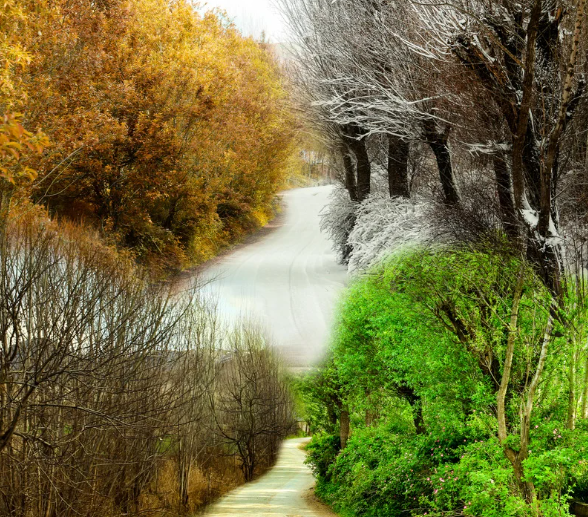
Well, we're finally beginning to see a change of seasons here in the desert. That means the daytime temperatures are dipping below 100 degrees, the mornings are a little cooler, and we can venture outside without feeling like we've stepped into an oven.
There's an old saying that the only constant in life is change. We see it in nature, in the weather, and in the passing seasons. Our lives move through seasons, too. Some bring growth and excitement, while others bring challenges, loss, or uncertainty. Some changes happen so gradually that we barely notice them. Others catch us completely off guard and leaving us wondering… Now What?
And here's the interesting thing:…
…when we want change, we can still feel anxious about it.
Change Demands Something of Us
CHANGE IS HARD. Not necessarily because change itself is bad, but because change demands something from us.
Sometimes those demands are relatively simple. As the weather turns colder, we may need to get our winter coats cleaned, adjust our schedules, or prepare our homes for the coming season. We grumble about the extra chores, but look forward to pulling out a favorite sweater or making that first pot of soup.
Other times, the demands are far more complicated. How do we celebrate the holidays after losing someone we love? What happens to cherished traditions when the people who made them meaningful are no longer there? How do we adjust to retirement, an empty nest, divorce, or an unexpected turn in our health?
Suddenly, change isn't just about adjusting our routines. It's about adjusting our expectations, our relationships, and sometimes even our understanding of who we are.
And not every change comes with a silver lining. Sometimes moving forward doesn't mean finding something better. It simply means learning how to live differently.
It's one thing to know that a new season is approaching. It's quite another to figure out how we're going to live in it.
Why Do We Resist Change?
We often know change is coming. We may see it approaching for months or even years, recognize that it's inevitable, or even look forward to it. Yet when the moment arrives, we hesitate.
Why?
Because there's comfort in the familiar. We know what to expect, even when our circumstances aren't ideal. We understand our routines, our relationships, and our place in the world. There's security in knowing where we stand.
Our brains naturally prefer predictability. Change disrupts that certainty, asking us to navigate unfamiliar territory without knowing how things will turn out.
And sometimes, the uncertainty of something better can feel more frightening than the certainty of something that isn't working.
We might eagerly anticipate retirement, then struggle with the loss of a familiar routine. We can celebrate our children's independence while feeling sadness that they no longer need us in quite the same way. Excitement and anxiety, relief and grief, can exist side by side.
But perhaps our resistance isn't always about the change itself. Sometimes we're resisting what comes after the change.
The familiar may no longer be working for us, but at least we know how it works. Change can take away that certainty, leaving us with a deceptively simple question.
Now What?
We've anticipated the change. Maybe we've even prepared for it. And then it happens.
Now what?
What do we do when the children have moved out, the career has ended, a relationship has changed, or life simply doesn't look the way we thought it would?
There's an important distinction here: Change is what happens in our lives. Transition is the internal process of coming to terms with what's happened.
A change can occur in a single moment, but adjusting to it may take months or even years. Our circumstances may be different long before our emotions have caught up.
We're no longer living the life we knew, but we haven't figured out how to live the one we have now.
We want answers. We want a plan. We want reassurance that everything will work out, preferably before we take the next step.
But life doesn't always provide a clear roadmap.
Perhaps part of navigating change is learning to tolerate uncertainty, recognizing that we don't have to figure everything out immediately. Sometimes we need time to understand what has changed before we can decide what comes next.
The Quiet Weight of a Passing Year
There's something else about autumn that can leave us feeling unsettled. As the days grow shorter and the calendar moves toward December, we become increasingly aware of how quickly time passes.
Wasn't it just January? Weren't we looking ahead to a whole new year, full of possibilities?
And now, another year is drawing to a close, and perhaps some of those possibilities haven't materialized.
The trip we never took. The friendships we meant to nurture. The project we never started. The changes we promised ourselves we'd make.
We find ourselves taking an unconscious inventory, focusing less on what happened and more on what didn't.
In a way, autumn carries its own sense of loss. The longer days are behind us, and we're reminded that time moves forward whether we're ready or not.
Sometimes what we're mourning isn't something we've actually lost, but something we thought would happen that never did.
For some, these feelings bring a passing melancholy. For others, the shorter days and awareness of time passing can deepen an existing sadness or depression.
But perhaps we're asking ourselves the wrong questions.
Instead of measuring the year by everything we didn't accomplish, what if we considered everything the year asked of us?
Maybe we cared for someone, navigated a difficult relationship, adjusted to an unexpected loss, or simply managed the challenges of everyday life. Perhaps we discovered a new interest, enjoyed an unexpected friendship, or found happiness in ordinary moments.
Not every year is filled with milestones or dramatic personal growth. Some years are about maintaining what we have. Others are about adapting, recovering, or finding our way through circumstances we never expected.
And some years are simply difficult. We don't have to pretend otherwise.
Perhaps the value of a year isn't found only in what we've accomplished, but also in what we've experienced, what we've cared for, and how we've lived through it.
Learning to Live in the Season We're In
Just as the seasons don't change overnight, adjusting to changes in our lives takes time. We may need to let go of old expectations, establish new routines, or simply allow ourselves to feel unsettled while we find our footing.
Of course, we humans tend to complicate things. We cling to summer while complaining about the heat. We eagerly await cooler weather, then grumble when the days become too short. Before we know it, we're wishing for the very season we couldn't wait to leave behind!
But our attachment to the familiar goes deeper than our preference for comfortable weather.
Every transition involves some degree of letting go. Sometimes we're leaving behind more than circumstances or routines. We're leaving behind a version of ourselves, one that knew where we belonged and what was expected of us.
Perhaps that's why change can be so unsettling. We aren't simply adjusting to new circumstances. We're discovering how to be ourselves within them.
And perhaps we can be a little more forgiving of ourselves along the way.
We don't have to greet every change with enthusiasm, turn every setback into a lesson, or measure every passing year by what we've accomplished.
We don't have to make every season of life productive or extraordinary for it to be meaningful.
We can acknowledge what didn't happen while appreciating what did. We can miss what we've left behind without wishing to return to it. We can feel grateful for the familiar while remaining curious about what lies ahead.
And when we're standing in that uncertain space, asking ourselves, "Now what?" perhaps we don't need an immediate answer.
Change may ask us to let go of what was, but it doesn't erase what mattered.
The seasons will continue to change, and so will we. We won't always know what comes next, but perhaps moving forward isn't always about knowing where we're going.
Sometimes it's about learning to feel at home in the life we're living, even while we're still figuring it out.